Introduction
In 2026, full stack web development has evolved into a powerful discipline that combines performance, scalability, and user-centric design. Businesses now demand applications that are fast, secure, SEO-optimized, and capable of handling real-world traffic at scale.
This article explores modern full stack web development, the technologies driving it, and best practices developers should follow to build future-ready applications.
What Is Full Stack Web Development?
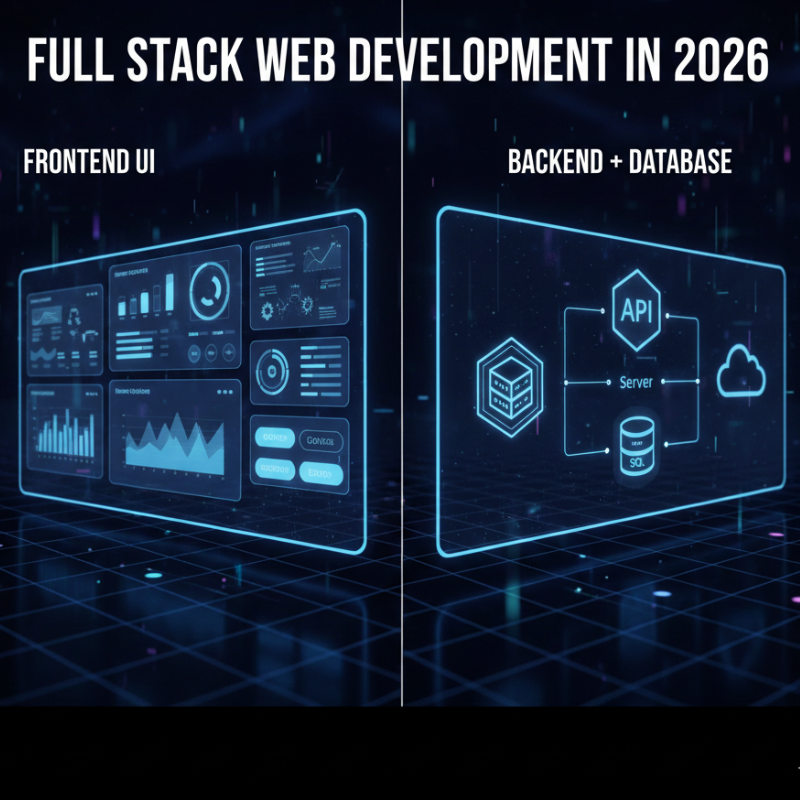
Full stack web development refers to building both the frontend (client-side) and backend (server-side) of a web application. A full stack developer understands how the complete system works—from UI/UX to databases and deployment.
Core Layers:
- Frontend (UI/UX)
- Backend (APIs & Logic)
- Database
- DevOps & Deployment
Frontend Technologies in 2025
Modern frontend development focuses on performance, accessibility, and responsiveness.
Popular Tools:
- React & Next.js for component-based UIs
- Tailwind CSS for rapid styling
- Framer Motion for smooth animations
- TypeScript for type safety
Key frontend priorities include SEO optimization, mobile-first design, and fast load times.
Backend Technologies Powering Applications
The backend handles authentication, data processing, and business logic.
Common Backend Stacks:
- Node.js with Express
- REST & GraphQL APIs
- Firebase & Serverless Functions
- MongoDB & PostgreSQL
Security, scalability, and clean API architecture are essential in modern backend systems.
Performance & SEO Optimization
Search engines favor websites that are fast and user-friendly.
Best Practices:
- Server-side rendering (SSR)
- Image optimization
- Lazy loading components
- Clean URL structures
- Proper metadata and schema markup
SEO is no longer optional—it’s a core part of development.
Deployment & DevOps
Modern applications rely on cloud-based deployment platforms.
Common Tools:
- Vercel & Netlify
- Docker
- CI/CD pipelines
- Cloud hosting (AWS, Firebase)
Automation ensures reliability and faster updates.
Why Full Stack Developers Are in High Demand
Companies prefer developers who can:
- Build complete applications
- Optimize performance and SEO
- Debug across the entire stack
- Deliver scalable solutions
Full stack developers bring efficiency, ownership, and technical depth to teams.
Conclusion
Full stack web development in 2026 is about more than writing code—it's about building scalable, secure, and SEO-friendly digital products. By mastering modern tools and best practices, developers can create applications that truly stand out.
If you’re looking to build or scale a web application, investing in full stack development is the smartest move.